“Palm gives you that forecast for the future based not only on your own data, but also on your own past data and performance.”
— Rodrigo Cabrera, Senior Specialist - Group Treasury Core, ON
READ CASE STUDY ON HOW 'ON' UNLOCKED $350M IN IDLE CASH
No More MANUAL RULES
Your forecast, built automatically from day one
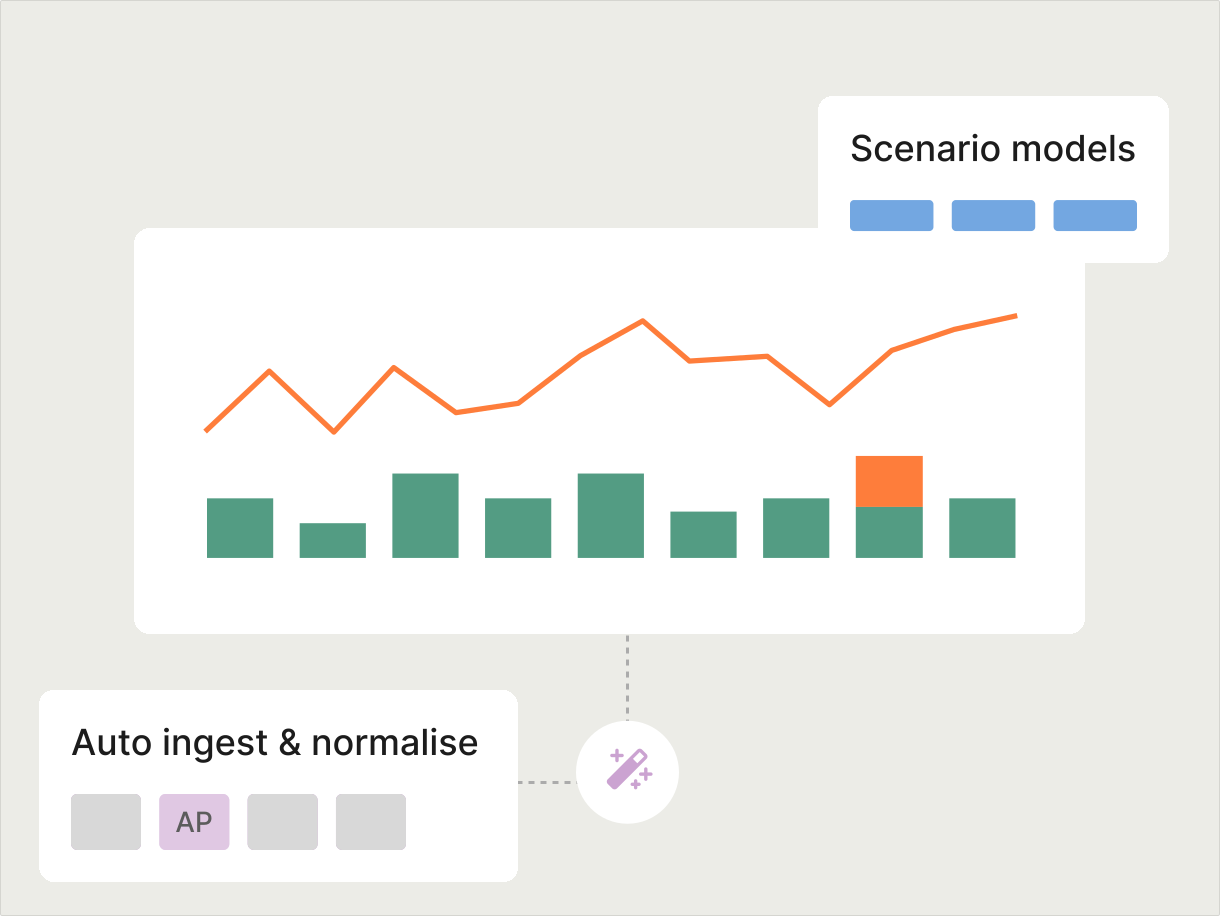
Palm ingests your historical transactions, open AP/AR from your ERP, and bank statement data — then generates a baseline forecast using 25+ ML models, including foundation models trained on financial time series. No templates. No formula maintenance.
The model learns your company's unique payment patterns; seasonality, payment cycles, receivable timing, and improves with every forecasting cycle. Most customers have a working AI forecast within 2 weeks of onboarding.
EXPLAINABLE AI
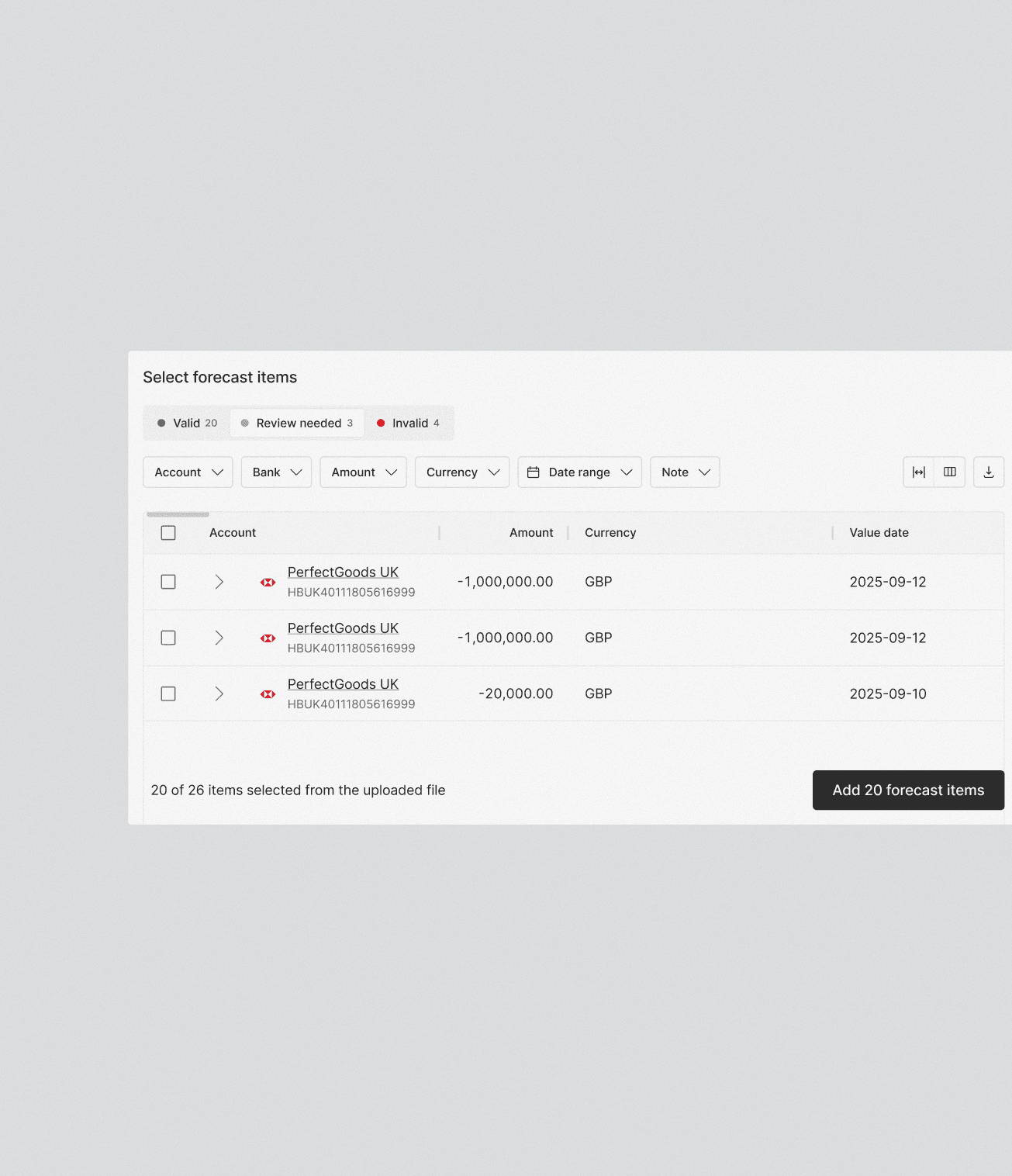
Every forecast line in Palm shows its source; whether it comes from ERP open items, ML prediction, manual input, or a batch upload. No black boxes. See what percentage of the forecast is based on booked data versus estimates.
Control which categories use ML and which don't. Disable AI for accounts where your ERP data is more reliable. Enable it where historical patterns matter most. You stay in control; the AI does the heavy lifting.
ALWAYS CURRENT
Rolling forecasts that measure themselves
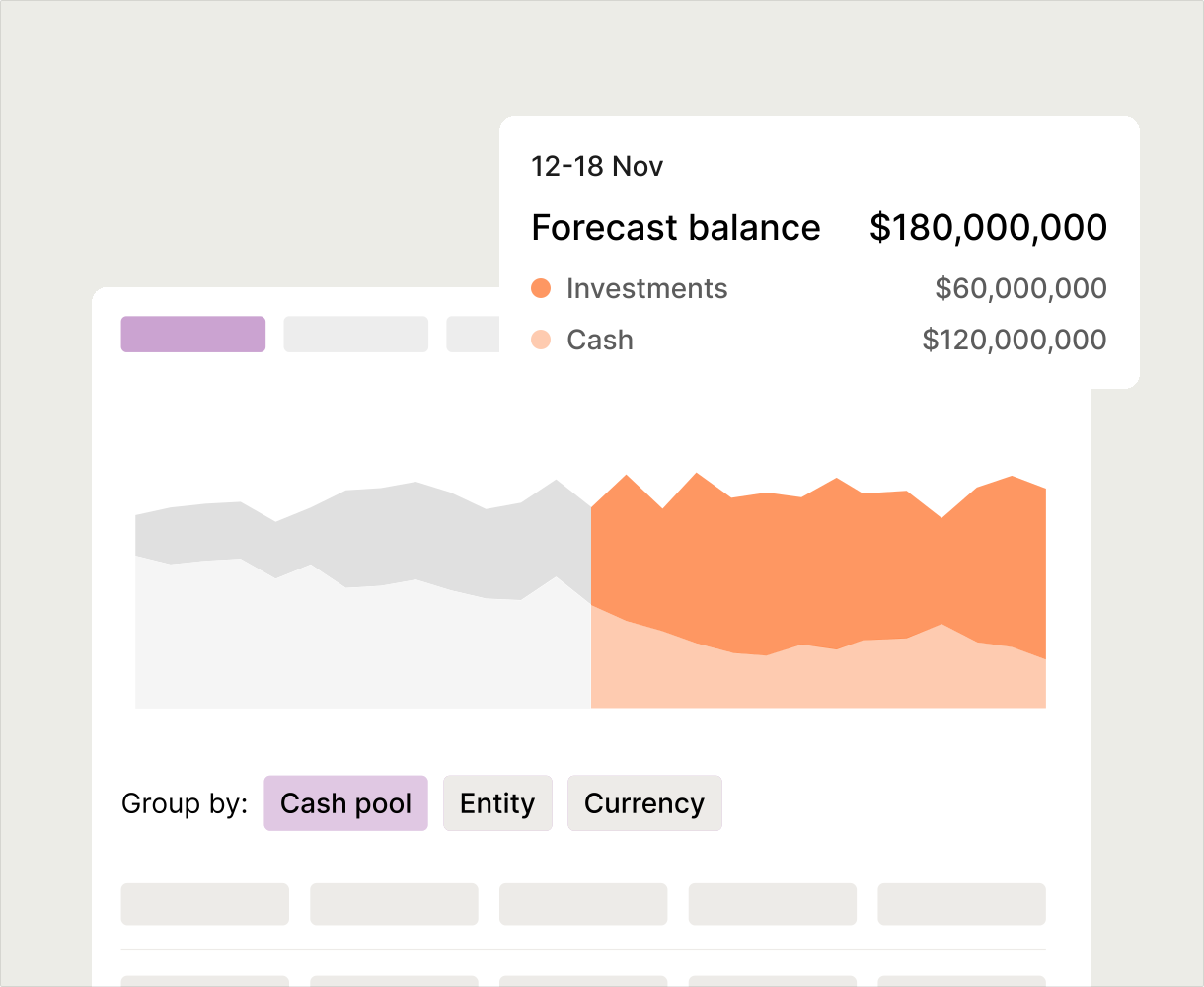
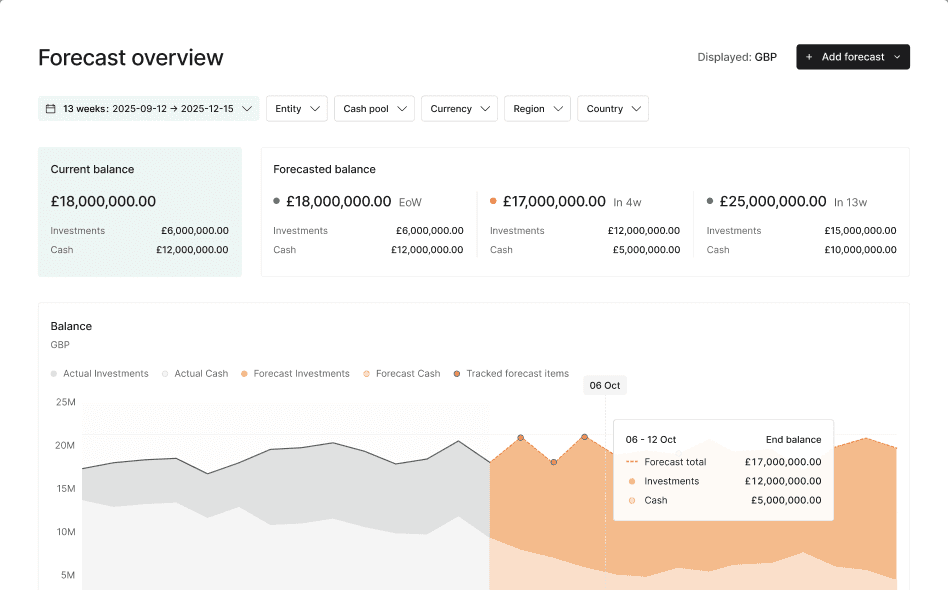
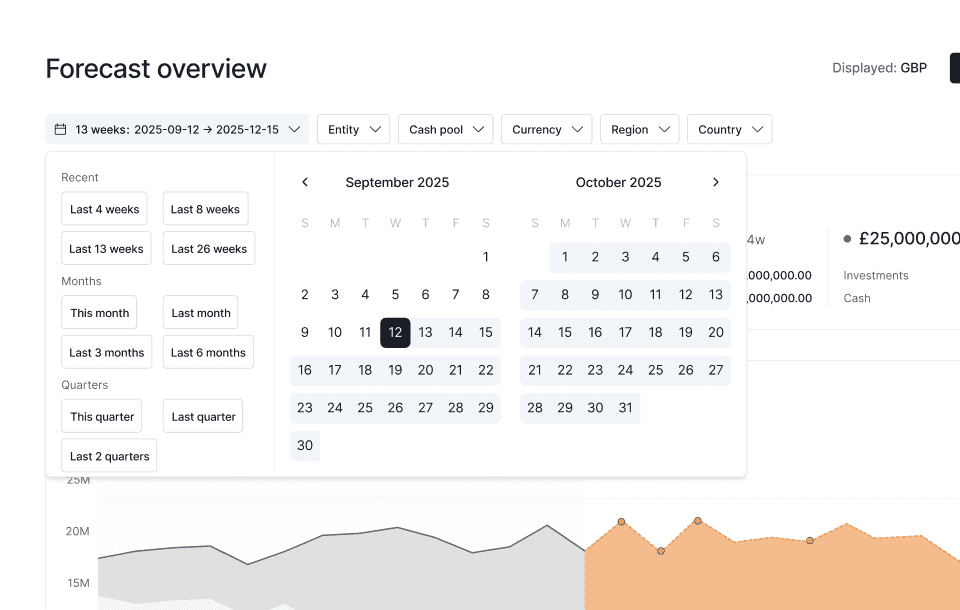
Palm generates and refreshes rolling forecasts automatically: daily or weekly, on your schedule. As actuals come in, the forecast recalibrates. Choose daily granularity for short-term liquidity, weekly for your 13-week horizon, or monthly for longer-term views. Run multiple horizons simultaneously.
Every forecast period is automatically measured against reality. See accuracy by category, entity, and time period, so you know exactly where the forecast is strong and where it needs attention.
SCENARIO PLANNING
Treasury teams shouldn't need to duplicate entire forecasts to answer "what if collections drop 5%?" Palm's scenario planning lets you apply simple percentage-based adjustments at the category level and see the impact instantly across your cash position.
Create named scenarios like "base case," "conservative," and "aggressive", all layered on top of your live forecast. Weekly and daily patterns are preserved when you adjust totals, so your scenarios stay realistic. Compare scenarios side by side, save them for board reporting, and track how assumptions change over time.